
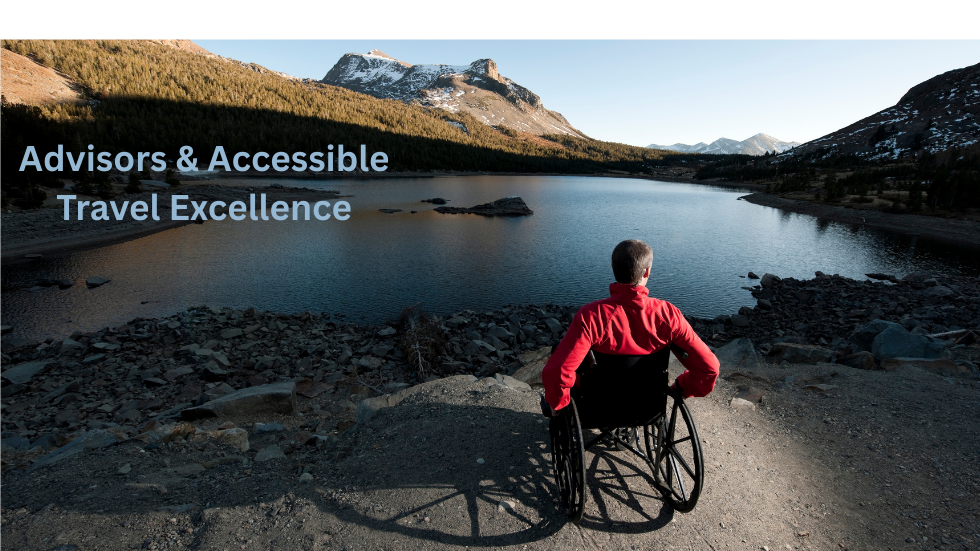
Travel is transformative. It opens doors, builds memories, and connects people to the world. But for clients with accessible needs, travel can also bring uncertainty and risk if their requirements are not fully understood and properly supported.
As a travel advisor, your role goes far beyond booking flights and hotels. You are an advocate, a planner, and often a lifeline. Ensuring accessibility isn’t just about compliance—it’s about dignity, independence, and creating experiences where every client feels safe and empowered.
Let’s explore why accessibility must be integrated into travel planning, where to educate yourself, and how to confidently serve clients with specialized needs.
Accessibility Is Design—Not Just Compliance
Too often, accessibility is treated as a checkbox: “Is this property ADA compliant?” While legal compliance matters, it is only the baseline.
True accessibility is thoughtful design. It considers:
- Mobility needs (wheelchairs, walkers, scooters)
- Sensory needs (vision or hearing impairments)
- Cognitive accessibility
- Chronic illness and fatigue considerations
- Neurodiversity
- Dietary and medical requirements
An “ADA-compliant” hotel room may technically meet regulations, but that doesn’t guarantee comfort or usability. For example:
- A roll-in shower may still have a lip at the threshold.
- Grab bars might be poorly placed.
- Bed height may not accommodate safe transfers.
- Doorways may technically meet width requirements but still feel tight with power chairs.
Accessibility should be integrated into travel planning from the beginning—not treated as a last-minute request.
Industry leaders like the American Society of Travel Advisors (ASTA) continue to emphasize professional responsibility and education around accessible travel. Meanwhile, the World Health Organization estimates that over 1 billion people worldwide live with some form of disability. This is not a niche market—it’s a significant and growing traveler segment.
The Power of Asking the Right Questions
Many clients won’t volunteer detailed information unless you create a safe, professional space to do so.
Instead of asking, “Do you need special assistance?” consider:
- “Do you use any mobility devices we should plan for?”
- “Are there bathroom or bed height considerations we should confirm?”
- “Will you need assistance at airports or during transfers?”
- “Are there sensory sensitivities we should share with the property?”
- “Do you require refrigeration for medications?”
Timing matters. Ask early—during the discovery phase—not after the trip is already booked.
Pro tip: Document everything in writing and confirm directly with suppliers. Never assume.
Why an ADA-Compliant Room Is Not Enough
ADA compliance sets minimum standards enforced by the U.S. Department of Justice. However, minimum does not mean optimal.
Here’s what you should verify beyond the ADA label:
- Exact door width (in inches)
- Clear turning radius inside room and bathroom
- Shower type (roll-in vs. transfer)
- Fixed vs. movable shower seat
- Height of sinks, counters, and closet rods
- Bed height from floor to mattress top
- Availability of portable shower chairs or lifts
Many properties list “accessible” without providing specifics. As an advisor, request room diagrams, photos, or conduct direct calls with the hotel’s accessibility coordinator.
Encourage clients to share photos of their equipment when appropriate. This allows you to confirm compatibility.
Remember: A failed detail can ruin an entire trip.
Websites Every Travel Advisor Should Bookmark
Education is critical. These resources help you stay informed and accurate:
- ADA Standards for Accessible Design
https://www.ada.gov
(Official compliance guidance and definitions.) - Society for Accessible Travel & Hospitality (SATH)
https://sath.org
Offers certification programs and training for travel professionals. - Open Doors Organization (ODO)
https://opendoorsnfp.org
Research-driven insights into the accessible travel market. - International Air Transport Association (IATA)
International Air Transport Association
Provides guidelines on air travel assistance standards. - Accessible Travel Solutions (ATS)
https://accessibletravelsolutions.com/training/
A specialist operator with strong insight into detailed accessibility requirements.
These sites help you understand terminology, legal frameworks, and best practices so you know what to ask—and when to ask it.
Integrating Accessibility into Your Agency’s Process
Accessibility should not be a special workflow. It should be embedded into your standard client intake and planning procedures.
Consider:
- Adding accessibility questions to your onboarding form.
- Building a vetted supplier list known for reliable accommodations.
- Creating a checklist for accessible bookings.
- Training your team annually.
- Following up post-trip for feedback to refine future bookings.
The American Society of Travel Advisors and other industry groups are working toward shared guidelines and consistent terminology across suppliers. As advisors advocate for clients, pressure increases for clearer standards.
When accessibility becomes a core value—not a reactive measure—you build trust and long-term loyalty.
Understanding the Emotional Side of Accessible Travel
For many clients with disabilities, travel planning is stressful. They may have experienced:
- Damaged mobility equipment
- Inaccessible transportation
- Hotels that misrepresented rooms
- Embarrassing or unsafe situations
Your preparation can remove fear from the equation.
When you anticipate barriers, confirm logistics, and communicate clearly, you give your clients confidence. That confidence turns into referrals and lifelong relationships.
Accessible travel is not charity. It is professional excellence.
Where to Get Educated
If you want to deepen your expertise:
- Earn certification through SATH.
- Attend accessibility-focused webinars through ASTA.
- Partner with suppliers who specialize in adaptive travel.
- Join forums and communities serving travelers with disabilities.
- Stay updated on air travel policies and mobility device protections.
Commit to ongoing education. Accessibility standards evolve, equipment changes, and traveler expectations rise.
Elevating the Industry
Accessibility is not an add-on. It is not a favor. It is not simply a compliance box.
It is a commitment to inclusive design, thoughtful questioning, and proactive planning.
When travel advisors fully understand accessible needs—and advocate fiercely to meet them—they elevate the entire industry. Your clients deserve more than minimum standards. They deserve seamless, dignified, unforgettable experiences. Go the extra mile, and you move beyond bookings—you become the advisor clients rely on, respect, and return to again and again.
As the travel industry continues to evolve, businesses that prioritize trust, transparency, and responsible practices will stand out. If you’re ready to strengthen your credibility and demonstrate your commitment to ethical travel standards, come join the TRUE Accreditation. Becoming accredited not only signals your dedication to industry best practices but also connects you with a network of professionals shaping the future of travel. Visit our website to learn more about how TRUE Accreditation can support your organization’s growth and reputation.